
Episode 5: Land Development with mike kissel and morgan rushnell
Before you’ve put one piece of lumber in the group or poured any part of a foundation, the job of transforming the land into something ready for building must begin. That process is also likely to yield situations that could lead to higher building costs, such as moving land, removing obstacles, and creating drainage, just to name a few.
To discuss these potential pitfalls and other costs of doing business are Mike Kissel of Mattamy Homes and Morgan Rushnell of LINE + PLACE. Mike and Morgan talk with hosts Aaron Kersey and Morgan Smith about what developers need to do to turn a piece of untouched land into land ready to support a thriving community.
Episode 4: The Hidden Cost of Site pLanning with ward marotti and rob reddick
Once you’ve found the land you want to build on and gotten the proper zoning, it’s on to figuring out how to build a structure and make it sustainable. Naturally, because communities and multi-family spaces use significant resources, you need to get your environmental impact done and done right.
On the fourth episode of Framing the Issue, we talk to Ward Marotti of EnviroTrac and Rob Reddick of McAdams Engineering. Ward and Rob take hosts Aaron Kersey and Morgan Smith through the environmental considerations needed in site planning. They talk about the role of retaining walls and stormwater management, as well as how hidden costs can drive the price of projects up by hundreds of thousands of dollars.
Episode 3: Land Use & Entitlements with bridget grant and rob nanfelt
As we continue our examination of the home building process in Charlotte-Mecklenburg, we turn to two of the area’s leading experts on what you can and cannot do with a piece of land once you’ve acquired it.
Bridget Grant is a land use and development consultant with Moore Van Allen and Rob Nanfelt is the executive director of REBIC (Real Estate Building & Equity Coalition), both located in Charlotte. Bridget and Rob join hosts Aaron Kersey and Morgan Smith for a discussion about how to get approval from the city and county to build your home.
Episode 2: Land Acquisition with cody king and chad lloyd
Hosts Aaron Kersey and Morgan Smith talk about land acquisition. Any prospective home builder’s first step is to find a piece of land to build on, but in Charlotte-Mecklenburg County, that’s not so easy, or cheap.
Joining Aaron and Morgan for a discussion on land acquisition is Chad Lloyd of DRB Group, Division VP of DRB Group and Cody King, Director of Land and Queen City Land. Chad and Cody offer insights into the land acquisitions process from site selection to permitting and beyond.
EPISODE 11: Selling and Buying a Home
It's taken a long time to get to the point where a new construction home can be built. From site selection and land acquisition to construction and marketing, we're finally ready to find a buyer for our house.
Of course, the project is still not complete. We need to navigate the choppy waters of finding a qualified buyer, financing, and pushing the sale across the finish line.
To do this, hosts Aaron Kersey and Morgan Smith are sitting down with special guests Frankie Franklin and Magda Esola to discuss the biggest purchase most people will make in their lifetime. The panel discusses strategies for affordability - particularly for first time homebuyers - legislative and regulatory challenges, the expanding role of AI, the impact of rising interest rates, and the importance of education for both buyers and brokers.
EPISODE 10: Home Building Marketing
After all the steps taken to secure land, develop it, and build a house, there’s still one more big piece of the puzzle that needs to be accounted for, and it also impacts the cost of a house. Marketing and getting a house sold is one of the last steps in the process, but it’s also one of the most important.
In this episode of the Framing the Issue Podcast, hosts Aaron Kersey and Morgan Smith sit down with Tara Whiteley of Eastwood Homes and Celeste Horton of Classica Homes to explore the intricacies of marketing and sales in the home building industry, highlighting how visual content, digital strategies, and AI are transforming the way builders connect with buyers. Our guests also share insights on marketing timelines, budget allocation, and the impact of AI on consumer research and lead generation.
EPISODE 9: Season 1 Mid-Point Recap
As the Framing the Issue podcast reaches the halfway point of its first season, hosts Aaron Kersey and Morgan Smith sit down together to discuss what they’ve learned so far.
Aaron and Morgan explore the complex factors discussed in the previous episodes of the podcast that are behind the housing affordability crisis.
Topics include regulatory costs, land development, material supply chains, and community involvement. They share insights from industry experts and discuss how these elements contribute to rising home prices.
EPISODE 8: Vertical Construction with Tom Crawford and Jodi Brickley
Having finally selected a suitable site for a build, with workable topography, acquired zoning rights, and hopefully not spend too much money molding the dirt to be ready, we’re now at the point where we can finally put shovels in the ground and lay a foundation. Of course, that’s no easy task either, and there’s plenty of opportunity for the build process to be derailed, delayed or pushed beyond the ideal budget.
To help keep those costs to a minimum and make sure the best build possible, we’re talking to two experienced professionals who have been involved with every step of the building process. Tom Crawford of Eastwood Homes and Jodi Brickley of Andrew Roby join hosts Aaron Kersey and Morgan Smith for a discussion about what happens once you’re ready to build.
Today’s episode of Framing the Issue breaks down the cost of new construction, the impact of zoning, permits and regulation, as well as the shortage in labor and trades.
Episode 7: Labor, Trades and Workforce Development with Matt Price and Jake Kennedy
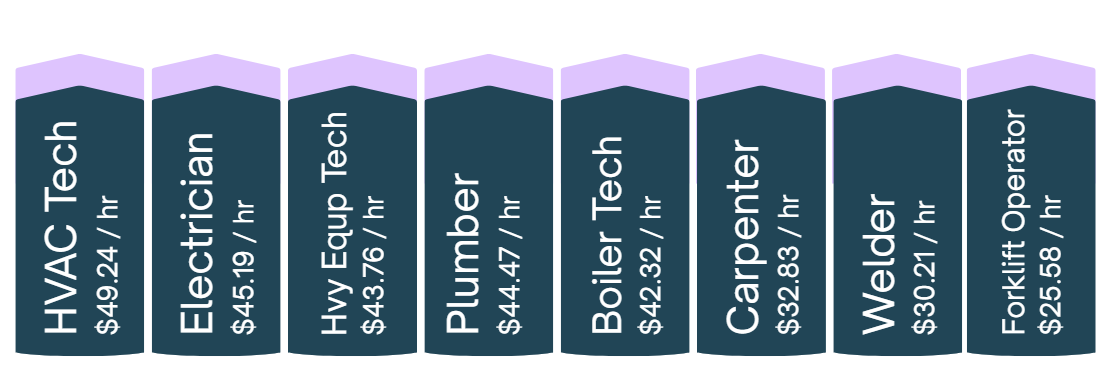
One of the less visible components of building a house is not just a key to unlocking better affordability, but also an economic ecosystem that provides career long opportunities to those willing to get their hands (just a little) dirty.
On today’s episode of Framing the Issue, hosts Aaron Kersey and Morgan Smith sit down with Matt Price of Price Brothers Plumbing and Jake Kennedy of Builders Bridge to discuss how the industry of labor affects housing affordability, but also provides young people with a career path that can be rewarding financially without the burden of education-related debt.
Matt and Jake talk about the evolving industry of labor, the importance of immigrant labor, and the opportunities available to those choosing that career path. Matt talks about how his family owned business trains new workers on the job and emphasizes the importance of real world experience, while Jake shows how organizations like Builders Bridge are making it possible for new workers to find placement within the industry.
Episode 6: Tariffs, Supply Chains & Materials with Charles Bowden
The vast majority of materials that you use to build a house are manufactured overseas and shipped to the US from around the world. That reliance on global shipping and distribution means materials can be subject to price fluctuations brought on by a wide variety of external factors.
To discuss how the cost of your house is affected by the cost of transporting materials, our guest is Charles Bowden of MSI, one of the world’s largest movers of building materials. Charles takes the time to break down trading routes from Asia, and how the closure of certain routes has forced shippers to raise the costs of getting their products to their destination, and how that affects the price the end user pays.
Episode 1: Welcome to framing the issue with jen schuster
In our first episode, we introduce you to the hosts of the podcast, as well as one of the biggest minds behind the podcast. Hosts Aaron Kersey and Morgan Smith tell you a little about themselves, their background, and what their goals are as you join them on this journey. Aaron and Morgan are then joined by Jen Schuster, Executive Officer of the Home Builders Association of Greater Charlotte, to talk about the HBA, what it is, and why we’re producing this podcast.
Charlotte Needs 85,487 Residential For-sale homes by 2029 - WHAT’s the economic impact of supplying the demand?
$4.17 Billion in Annually Recurring Local Income
$923 Million in Annually Recurring Taxes & Revenue for Local Governments
52,839 Jobs Created and annually maintained
A recent study (February 2025) commissioned by the NC Chamber of Commerce Foundation, NC Realtors and North Carolina Home Builders Association, conducted by third party researcher Bowen National Research, found North Carolina in need of 442,118 for-sale homes by 2029. 85,487 of those are needed across six Charlotte region counties ; Cabarrus, Gaston, Iredell, Lincoln, Mecklenburg and Union. Supplying the demand will create a boom for our local economy and increased economic stability into the future. As our Economic Development partners across the region work to bring in new jobs, building rooftops for those workers is essential to keep the cost of home ownership affordable for local families.
when we build, its not only supply we gain - its jobs. Builders are economic Engines for a growing market.
What’s Stifiling building in the charlotte region?
✓ sewer capacity and allocation Regulations
There are various moratoriums in place across the region, including; Belmont, Troutman and the South Iredell Pump Station service area. Cabarrus County’s allocation matrix for available capacity is stifling residential construction - down 61% from 2020 for annual home closings, while Union County’s Twelve Mile Creek Wastewater Treatment Plant Extension is currently under construction. Sewer capacity and allocation regulations are the most significant hurdle to increasing the supply of housing in the region.
✓ Overly Burdensome Environmental Regulations
While environmental stewardship is important, some regulations go beyond what's necessary -adding time, expense, and complexity to development.
✓ Unnecessary Material Mandates
Cities across the region have adopted architectural standards that prohibit economically viable and building-code-approved materials, just so their communities maintain a certain aesthetic. Fewer choices only make prices higher.
Framing the Issue
*
Framing the Issue *
JOIN THE MOVEMENT
Whether you’re a homeowner, renter, policymaker, or community leader—your voice matters. Join the movement to modernize housing policy in the Charlotte region.